top of page
savemedicaid landing banner 6.jpg
Help Save Medicaid for Severely Ill Americans
Right now, HHS can save tens of thousands of people.


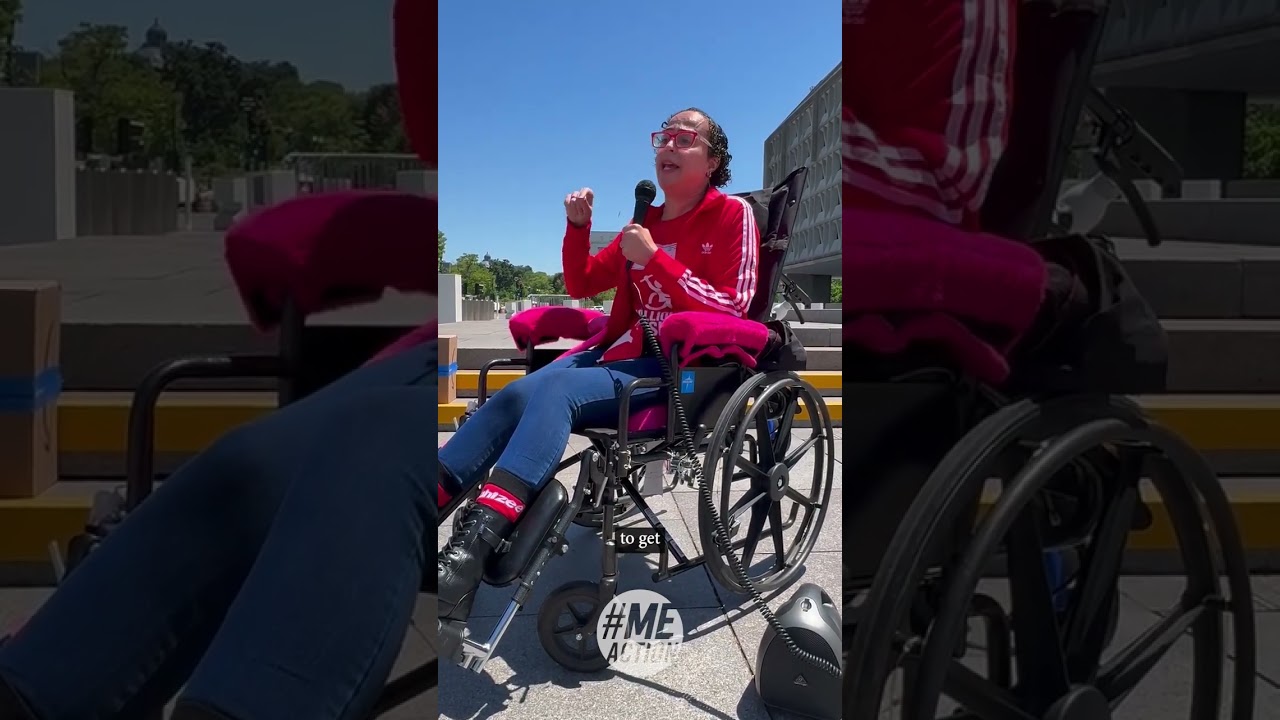
Despite being one of the most debilitating chronic diseases, ME/CFS and Long COVID are at high risk of being left off from the “medically frail”exemption list for Medicaid work requirements – which means we are at high risk of losing our health insurance when Medicaid work requirements kick in. 

ME/CFS is highly disabling - more disabling on average than multiple sclerosis, congestive heart failure and end-stage renal disease. Only one in four people with ME/CFS is able to work. 

Despite this, ME/CFS lacks official disability recognition due to decades of stigma. ME/CFS is the least-funded major disease per capita in the United States relative to its burden, and still not taught about in medical schools. We are being forced to prove our illness once again.   

HHS is expected to finalize guidance by June on how states should determine eligibility for ‘medical frailty’ exemptions.

We are calling for the HHS to: 

  • Recognize ME, Long Covid, and other Infection-Associated Chronic Conditions as serious, complex medical conditions that meet medical frailty criteria.
     

  • Accept self-declarations of medical frailty whenever possible, to reduce barriers to exemptions, and to accommodate the significant rates of under-diagnosis and under-treatment in our patient populations.
     

  • Include new diagnostic codes in ex parte verification processes for exemptions, including: ME/CFS: G93.32l Long COVID: U09.9; postural orthostatic tachycardia syndrome: G90.A; hypermobile Ehlers-Danlos syndromes: Q79.62; mast cell activation syndrome: D89.4.

“My sons are severely disabled by ME. They require 24/7 care and are unable to reach their intellectual potential or live independently. My sons have never broken a curfew because the only places they go are with caregivers. They cannot attend school, have not learned how to drive, cannot socialize with friends, and have never been on a date.”
 

— Denise, caretaker to two sons with severe ME

“My life with severe ME was small, very small. A bedroom, a bed. A commode next to it. The bathroom 12 steps away, too far. The blinds down. Sunglasses or eye guard on and earplugs in. All the time. Light hurt. Sound hurt. Everything hurt.” 


— Lisa Marie, What Is Myalgic Encephalomyelitis Like? (2026)

STATS 
 

Myalgic encephalomyelitis/chronic fatigue syndrome (ME/CFS) is a severe and complex, multisystem disease triggered by infection up to 80% of the time. An estimated 8 million Americans are living with ME/CFS. 


Up to half of people with Long COVID meet ME/CFS criteria at six months. Between 17- 20  million adults have long COVID in the U.S.

People with ME/CFS have an extremely low health-related quality of life. On the median, ME/CFS is more disabling than multiple sclerosis, rheumatoid arthritis, chronic renal failure and congestive heart failure. 25% of people with ME/CFS are homebound or bedbound. 


Approximately 10 million people are expected to lose healthcare access through Medicaid because of new federal work requirement policies. ME/CFS, Long Covid and other Infection-Associated Chronic Conditions must qualify for the “medical frailty” exemption from work requirements. ME/CFS is a serious, complex medical condition.


The core symptoms of ME/CFS inhibit work and daily activities including: 

  • Orthostatic intolerance hinders ability to sit or stand up

  • Cognitive dysfunction interferes with thinking and organization

  • Post-exertional malaise harms patients after physical, cognitive, or emotional exertion.  


People with “mild” ME still suffer a 50% decrease in functional capacity. Only 1 in 4 people with ME are able to work.

bottom of page